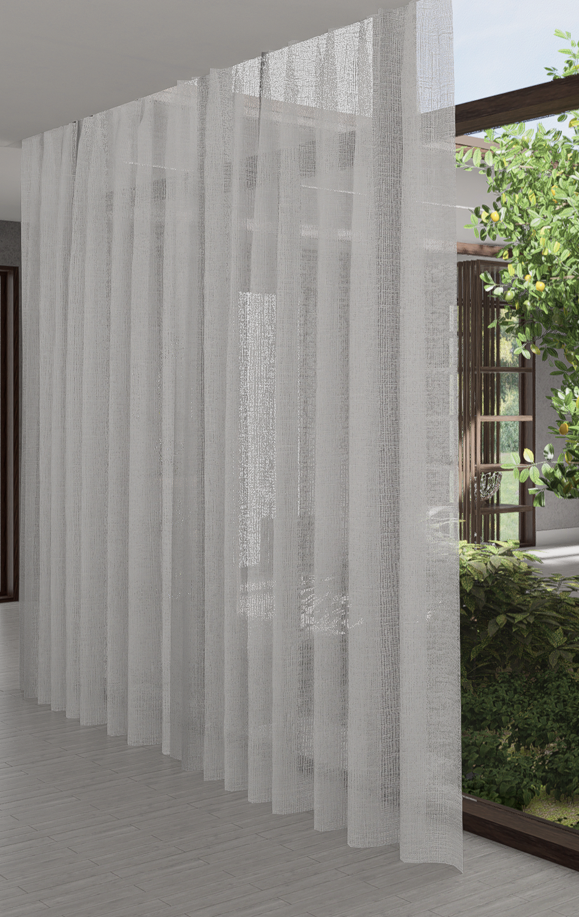
I see them in various renderings but I have been unable to replicate anything consistently and of good, realistic quality. You may have seen my struggles in other threads.
The D5 dynamic curtains are okay but not reliable. Sometimes they render, sometimes the entire bottom half is missing. And they tend to look too rustic.
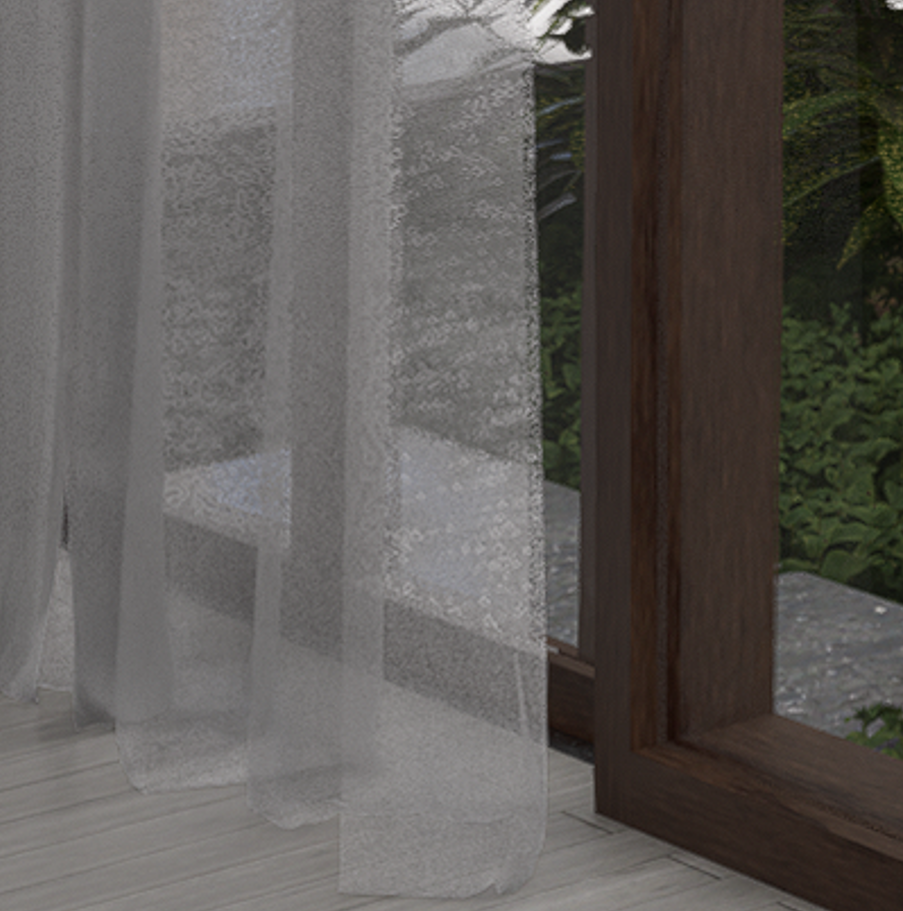
I can make a translucent curtain, but I can’t make a sheer curtain without weird patterns, textures and white(!) shadows.
All of my curtains are coming from SketchUp. I don’t know if that’s the issue and I guess the .skm file that comes with them can’t be used in D5?
Any advice or tips would be much appreciated.
3 Likes
Hi, I notice that you still have curtain problems, I give you a high site where you can download anything in any graphic format, but it depends on it. Oggetti BIM - Download gratuito! | BIMobject,
I have already selected the web page for you, I hope you solve it and it satisfies you.
This is another site, “https://www.archiproducts.com/it/prodotti/tende-a-bastone”
Then there is another site in the D5 forum talked about it where you can download other items that you don’t find in the program, and it is “
https://www.modelplusmodel.com/”
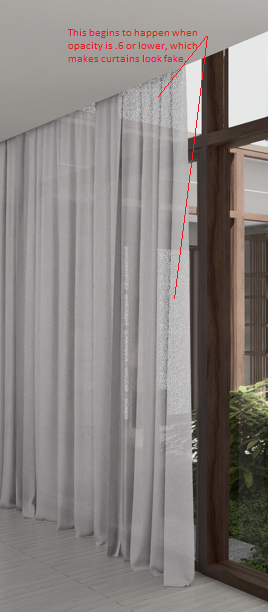
Thank you for your help. I am beginning to believe that the assets from SketchUp are not the problem, the D5 textures are. This is but one example of issues that make my curtains look fake. It looks good but at the lighted areas, the fabric gets weird.
*Actually it happens when opacity is .7 or higher.
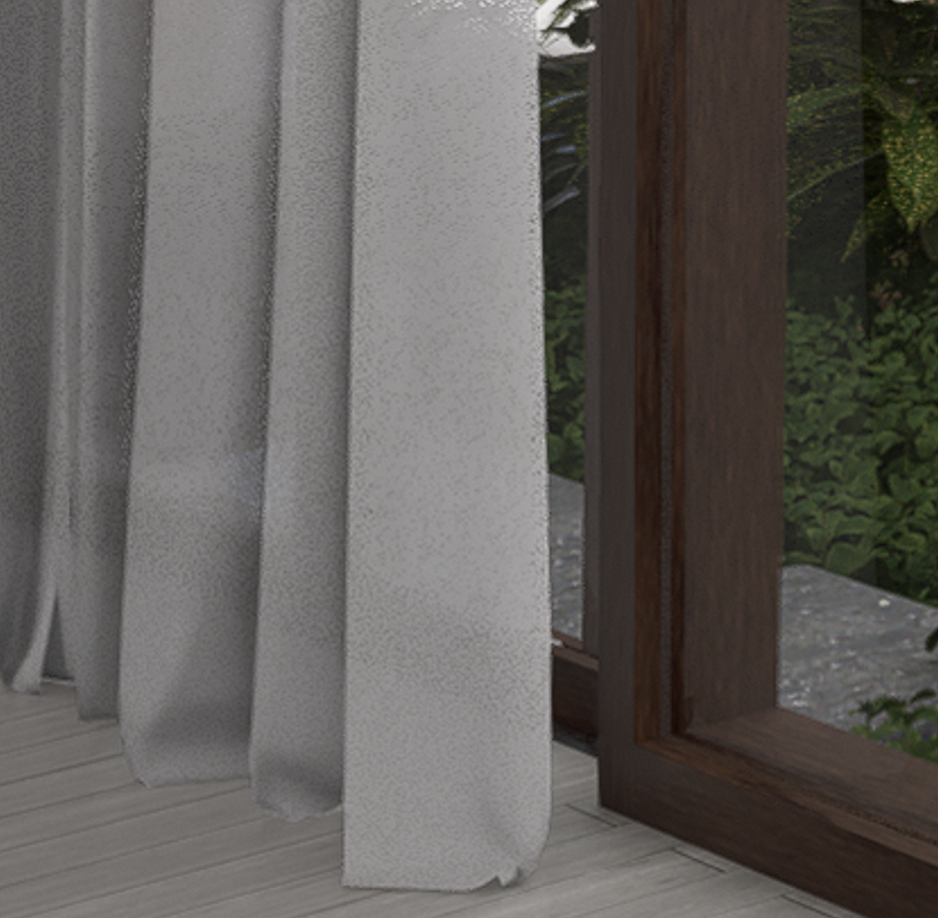
This is the best sheer I’ve come across. It’s a D5 asset (dynamic curtain) with a texture that I cannot replicate myself:
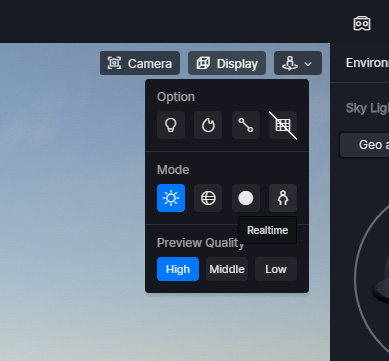
They agreed with you about the D5 plot of the last picture you posted. It seems to me that Oliver has given you some indications on the texture of any fabric, that is to say adjust the UV, then he has also given you, if I’m not mistaken, indications to stop the dynamism of the curtain, ( we will work on a solution for this problem. For now, you can turn off Real-time option to let the curtains become still, but this is a global setting for the whole scene.).
Hi, Riccardo
1 Like
Hello Jeffrey, the result looks not bad, but I understand your meaning because there is still noise problems with the area behind the sky. Our dev team has identified this issue and we will find a way to solve this problem.
1 Like
Thank you, Oliver. In the mean time would D5 consider posting in the tutorial forum how to replicate the texture in the dynamic sheer curtain – fabric type, template type and all of the settings (opacity, roughness, AO, etc? I have tried for several hours across many days to replicate it and I cannot.
1 Like
OK, Jeffrey, I will let D5 Works team know this need 
A fellow forum member showed me the settings he uses for his curtains. I got this:
Then I tried many many attempts and got this using frosted glass, cloth template and about .62 to .7 on opacity. It’s okay but since I’m trying to make realistic renderings, it’s certainly not great.